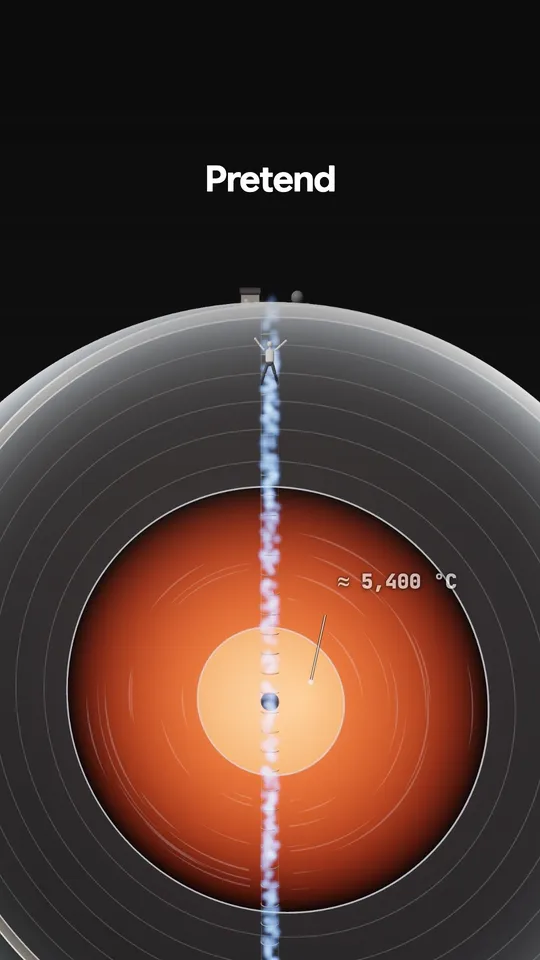
Can a penny dropped from the Empire State Building kill you?
No: a penny tumbles as it falls, so the air stops it speeding up after about 15 metres, roughly five floors. A tumbling penny tops out at about 40 km/h, so it hits about as hard as one dropped from a fifth-floor window. Pennies dropped from a balloon by physicist Louis Bloomfield didn't hurt, and one bounced off his head.
What the reel shows
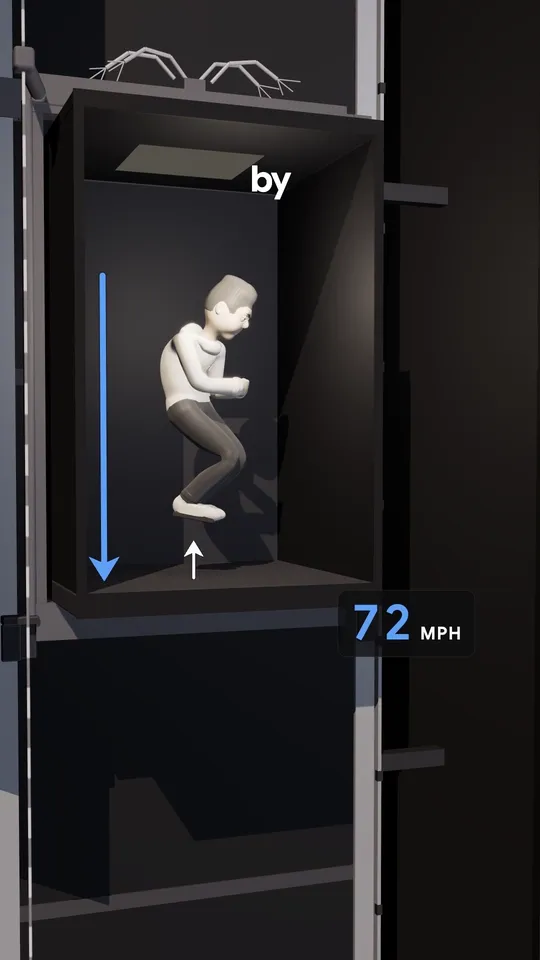
The reel opens on a giant penny above the Empire State Building, with the 443 m tip marked, then drops to you on the sidewalk below. A split screen sets the skyscraper beside a five-storey building. The penny flips over and over as the air pushes back, and its speed readout stops climbing after about 15 m and holds near 40 km/h. It lands on your forehead like a gentle flick.
Transcript
A penny just fell off the top of the Empire State Building, and it's falling straight at your head on the sidewalk below. You've probably heard that a penny from up there could kill you. But thanks to the air, it hits you about as hard as a penny dropped from a fifth-floor window. A penny is thin and flat, so it flips over and over like a leaf. The air pushes back on every flip, so after a short drop, the penny stops speeding up. From there, it flutters the rest of the way down at that same speed, and bounces off your forehead like a gentle flick.
The facts, with sources (6)
- It's a famous urban legend. Physicist Louis Bloomfield calls the penny that punches a hole in the sidewalk "a famous urban legend". MythBusters named the building the likely source of the myth. Louis Bloomfield, How Everything Works · MythBusters 2003 season (Wikipedia)
- A penny tumbles as it falls. A US penny weighs 2.5 g and is 1.52 mm thick. "The penny tumbles as it falls and produces a broad turbulent wake," which drags hard on it. Louis Bloomfield, How Everything Works · US penny specifications (Wikipedia)
- It stops speeding up after about 15 metres. Bloomfield, quoted by Scientific American, says pennies reach terminal velocity after only about 50 feet (15 m) of fall, roughly five floors. Scientific American
- Its top speed is about 40 km/h. Hovering pennies in a vertical wind tunnel, Bloomfield found that a tumbling penny's terminal velocity is about 25 mph (40 km/h). With no air, a penny falling from the 443 m tip would hit at about 336 km/h. Louis Bloomfield, How Everything Works · Empire State Building (Wikipedia)
- It feels like a flick. Bloomfield said being hit would feel like "a flick to the forehead, but not even very hard". Pennies he dropped from a balloon didn't hurt, and one bounced off his head. Scientific American · Louis Bloomfield, How Everything Works
- MythBusters found no penetration. According to Wikipedia's summary of the 2003 episode, the show fired pennies at 65 mph into concrete, asphalt and a gel head with a human skull, and none got through. MythBusters 2003 season (Wikipedia)