Claude Code for Instagram Reels: how I make explainers that aren't AI slop
I make the animated explainer reels on @valueanimate with Claude Code: research, script, voice, animation, captions and sound, all from one project folder. Most of the system exists so that what the AI makes is true, easy to follow on one listen, and approved by me before it posts. This is the whole workflow, including the parts that failed.
Why I stopped animating by hand
In 2024 I animated discipline and mindset videos for @valueanimate by hand, in After Effects. They got millions of views, and the account has 251K followers. But I couldn't sustain the work, and the format faded.
When I came back in 2026, I tried carousels and static posts first. They didn't work. Reels are the bet: short animated explainers in English, with an AI voice, made end to end with Claude Code. The goal is three to four a day. I'm not there yet: I work in batches of ten, and the first batch started posting on 12 November 2026.
I logged every step as I went, because the workflow is becoming a course. The numbers here come from that build log and the project's research files, and I drafted this guide with Claude from them.
What "not AI slop" means in practice
Slop is unchecked facts, three ideas in 30 seconds, a voice racing through sentences you can't picture, and one template on every post. The system answers each:
- Facts with sources. A claim ledger with source URLs comes before the script, and the sources go in the caption.
- One idea per reel. Side facts become their own reels.
- Told for the ear. Every script goes through a test that simulates hearing it once.
- A house style. One measured, frozen look, all our own animation. Instagram says it removes accounts that mostly post unoriginal content from recommendations (Instagram Creators).
- A person signs off. I read every script before production, after three automated checks.
The workflow at a glance
The project is one folder opened in Claude Code. A CLAUDE.md file tells every session what the account is and which rules apply. Two project skills hold the procedures: write-script (topic to checked script) and make-video (approved script to finished reel). Claude Code wrote the tools; I decide and check.
| Step | What happens | Tools |
|---|---|---|
| Topic | Find stories that already performed | fetch_transcripts.py, topic_performance.py |
| Facts | 8 to 15 sourced claims | write-script skill |
| Script | The plain story first, then two drafts | new_script.py |
| Checks | Linter, listen test, critic, then me | lint_script.py, listen_test.py |
| Voice | Gemini text-to-speech, timed word by word | tts.py, master_voice.py |
| Animation | Shot plan, render, QA | make-video skill, render_episode.py |
| Post | Caption with sources, a CTA chosen per reel | cta_kinds.json, deliver_batch.py |
| Read | Rates per 1,000 reach | Instagram Insights |
Only the captions and the CTA test are Instagram-specific. The same 1080×1920 render works as a YouTube Short, and every script gets a YouTube title.
Step 1: Pick topics people already chose
I don't brainstorm topics; I look at what already worked.
The downloader can't list Instagram profiles, so the corpus, now more than 300 transcripts, comes mostly from YouTube Shorts, transcribed on my Mac with whisper.cpp. Take the top-viewed and the most recent videos: one shows what's proven, the other what the creator does now.
tools/.venv/bin/python tools/transcripts/fetch_transcripts.py channel https://www.youtube.com/@HANDLE/shorts --creator HANDLE --top 40 --recent 15The benchmark is Zack D. Films, whose 3D explainer Shorts are the reference for this format.
Then topic_performance.py scores 9,649 Shorts titles from 20 explainer channels, each against its own channel's median. It found:
- Body topics win. At Zack D. Films, body titles produce 2.2 times as many big outliers as his average.
- "How it works" works when "it" is in your body or your hand. Machines and factories rarely do.
- "How to…" titles do about half as well as average. People want to understand, not be taught.
- Brain and psychology is a weak family. That was my old niche.
So the account pivoted from mindset to how your body, your stuff and the world work. A new topic needs proof that the same story already did outsized views elsewhere, and a scene the viewer can be put in.
Step 2: Facts before a single line
Every script starts with a claim ledger: 8 to 15 facts, each with a source URL. Facts too shaky to say flatly go on screen or in the caption, with their range. If the core payoff can't be verified, the script stops.
Models misremember numbers and round off claims. In the first batch, reviews caught:
- "If the Sun switched off": a dark Sun keeps its mass, so Earth would keep orbiting. It has to vanish (the Sun reel).
- A tattoo finding from mice, stated as fact about your skin (tattoos).
- "60 years" of knuckle cracking, when the doctor's own paper says 50 (knuckles).
- "Use a lid" as a rule for any pan fire, when the fire-safety advice covers a small one (grease fire).
- "Your smoke alarm is radioactive", which isn't true of optical alarms (smoke alarms).
Step 3: Write it for the ear
I got this step wrong first, and it matters most.
My first ten scripts read well on paper, and every check I had read them on paper too. The first three went out and underperformed. When I listened properly, I couldn't follow them. From the knuckle reel: "One doctor's mom warned him, so for over 50 years he cracked his left hand…" You hear a doctor being scolded by his mother. He was a teenager when she warned him.
Five research agents dug into why. One compared my scripts with Zack D. Films' on the same topics:
- My own rules caused it. An 80-word budget and "no hedges" had cut the words a listener needs, like "as a teenager".
- We talked 20% faster than him: 3.2 words a second against 2.76.
- Each reel held two to five ideas. His hold one.
- 30 seconds was a selection error. His 35 to 50 second Shorts beat his 20 to 35 second ones in every year from 2022 to 2026.
The rewrite starts from one test:
Someone who hears it once, at speaking speed, can picture every sentence and retell the story correctly.
Rules that serve it:
- Line 1 is a picture: a body, a place or a moment, with something wrong within about nine words.
- One moment per sentence, time markers first ("Fifty years later,"). Time only moves forward.
- People are called what they are at that moment: a teenager when he's warned, a doctor once he becomes one.
- One name per thing: bubble, bubble, bubble; never bubble, cavity, pocket.
- Length follows the story, from 20 seconds to 2:50, with the voice at its natural pace.
The full method, from the facts to two drafts, is in how to write an explainer reel script.
Step 4: Three checks, then me
A script passes four gates in order. One that fails the ear test never reaches the critic.
The linter
lint_script.py is plain code, no AI. It flags what makes a script sound generated: "did you know", "here's the thing", "it's not X, it's Y", moral endings, lists of three. Why not ask Claude to review its own script? In a CHI 2025 study, language models were worse than professional writers at spotting the tics of AI writing (Chakrabarty et al.). Code catches every pattern it knows.
Calibration is the important part. The first version, built from best-practice advice, would have failed 86% of Zack D. Films' real scripts. After tuning on real data, it failed 23% of his top 70 hits and 52% of his flops.
The first-listen test
An AI reading the whole script fills every gap, like the writer does. So listen_test.py gives the script to listener personas one sentence at a time, each remembering only its own short note: a 14-year-old, a tired scroller at midnight, an intermediate English speaker, a topic outsider, a sceptic. They flag whatever loses them, then retell the story. A separate judge scores the retells against an answer key sealed before drafting. It all runs on Google's Gemini, a different model family from the Claude writer.
I tested it on scripts I already knew. Two of three Zack D. Films scripts passed, and all four of mine failed. On the knuckle reel, the 14-year-old persona retold it as "his mom, who was apparently a doctor, told him not to". My exact confusion, found by a machine.
The critic, then me
A fresh Claude agent that never saw the brief compares the two drafts twice, order swapped, and scores the winner against a rubric with quoted evidence. It must not be the writer: models recognise and favour their own output (Panickssery et al.). In the second batch it caught six factual slips the listen test can't hear, like a comforting "about an hour" in ice water.
Then I read the script and picture it. I approved all ten in the second batch. AI judges never get the last word: in a blind test, one rated the most-viewed Zack D. Films Short of all time 3 out of 10.
Step 5: Voice, animation, captions and sound
Voice
The voice is Gemini text-to-speech through Google Cloud, fed the plain script with no style prompt; every style instruction I tried sounded worse. After auditions, the house voice is Charon. Whisper transcribes every take and lines its words up with the script's.
The look
I picked the style by watching, not by describing. Claude agents rendered the same 36-second reel in six styles, and watching them side by side settled the reference look I wanted. Then I measured it into numbers: captions at 72 px, each word three frames after it's spoken, a pose change about every 1.3 seconds. "Make it look like X" fails; numbers work.
The result is ours, and faceless: a dark grid, word-by-word captions in a cyan box, one gold accent for the invisible thing each reel explains, and a drawn presenter, the VA man, in 27 poses. The stills are AI images; everything that moves is code, rendered with Remotion. The setup is in how to make videos with Claude Code and Remotion.
I froze the approved pilot, then proved the template by rebuilding it: 53 of 53 test frames came out pixel-identical.
Captions and sound
Captions use the script's spelling, not the speech-to-text's, so "Ig Nobel" never becomes "IG". For sound, I measured the music beds of top explainer Shorts, generated dozens of AI candidates, and rejected the best three by ear. The house sound is voice plus sound effects, no music. The sound layer was a switch, so dropping the music took about three minutes.
One command per reel
Each episode is a data file, a shot plan: which shot type, which still, which word each thing lands on.
tools/.venv/bin/python tools/production/new_episode.py content/scripts/approved/VA-0011_slug.md
tools/.venv/bin/python tools/production/shotplan.py check va-0011
tools/.venv/bin/python tools/production/render_episode.py va-0011
The first command makes the voice, times every word and drafts the plan. The last renders, mixes, masters and runs QA in about 75 seconds. Designing shots takes most of the time, and Claude agents do it: the first batch was ten reels in one evening, four agents at a time, a median of about 47 agent minutes per reel.
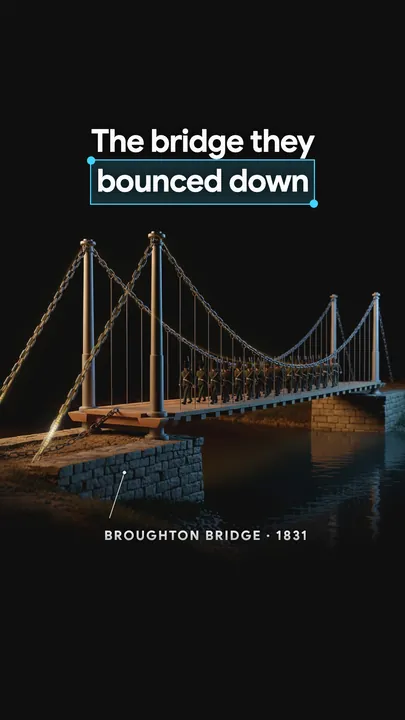
My first three finished reels all opened on a macro photo and ended on a white paper page. Each was good alone; together they looked like a template. So the look is fixed and the structure isn't: each reel draws its opening, body and ending from a catalogue, and variety_check.py fails a batch where neighbours repeat.
Step 6: Posting and the CTA experiment
The first ten reels are an experiment on the end call to action, assigned in advance: share and follow on three, none on three, share only on two, follow only on two, never the same kind twice in a row.
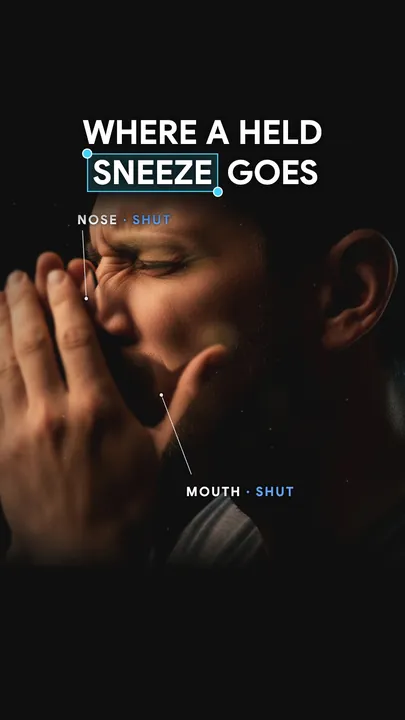
Share lines name one specific person. "Send this to the friend who always holds in their sneezes" closes the sneeze reel. The CTA sits in its own script section, outside the story, and every reel renders with and without it.
Instagram says engagement bait limits distribution (Instagram Creators FAQ), and in 2024 it said it may not recommend reels that explicitly ask for shares. I took that risk to measure it. Trial Reels have no A/B feature, so the test compares different reels.
Captions put the CTA in line 1, the only line most people see before "more", then a short story, then a footer: "Made with AI and Claude Code" and the sources. Each finished reel lands in Google Drive with its caption, ready to post from my phone.
Step 7: Reading the numbers honestly
The test plan calls for logging each reel at 48 hours and 7 days: reach, the non-follower share, watch time, completion, sends, saves, follows and profile visits, compared per 1,000 reach, because raw views mislead.
The decision rule was written before the first post: a CTA kind becomes the default only if it wins on follows or sends without losing more than about 20% of non-follower reach. Otherwise the default is no spoken CTA.
Ten reels is a small sample, and topic usually outweighs the CTA. The batch is still posting: direction, not proof.
The most useful result so far wasn't a number: I listened as a viewer and couldn't follow. When results disappoint, don't patch the scripts. Find the rule that produced them.
What I'd do differently
- Test the ear from day one. My linter, my critic and two blind tests all read the text. Nothing listened.
- Read the whole distribution, not the top. I copied the length of a creator's best videos instead of checking how each length performs.
- Keep your own pace. I sped the voice up to match a creator with a different format.
- Watch every reel before it posts. I approved the first batch on Claude's review (contact sheets, automated QA) without listening to it. That's how the ear problem reached the feed.
- Template the look, not the structure. Write down which choices were style and which belonged to one story.
- Build every layer as a switch. Music and footnotes went after I watched; the CTA is still under test. Switches made each "no" cost minutes.
Where to start
- Make one project folder and a
CLAUDE.mdthat describes your account: the niche, the audience, the rules. - Pull the top and most recent transcripts from creators you want to match, and study their first sentences.
- For your next reel, write the claim ledger before the script, and keep it to one idea.
- Read the script aloud once to someone who doesn't know the topic, and ask them to retell it. Rewrite wherever they stumble.
The free Script Kit has a lite version of my script skill, the checker and three of my scripts with notes. The full system, topic to finished reel, is the course. For reels made for your brand, see reels for brands.