How do you escape a rip current?
Don't fight it: if you can, swim parallel to the shore until you're out of the current, then head for shore. A rip current is a narrow channel of fast water flowing out to sea, and fighting it wears swimmers out. If you can't swim out, float or tread water, and wave and shout for help.
What the reel shows
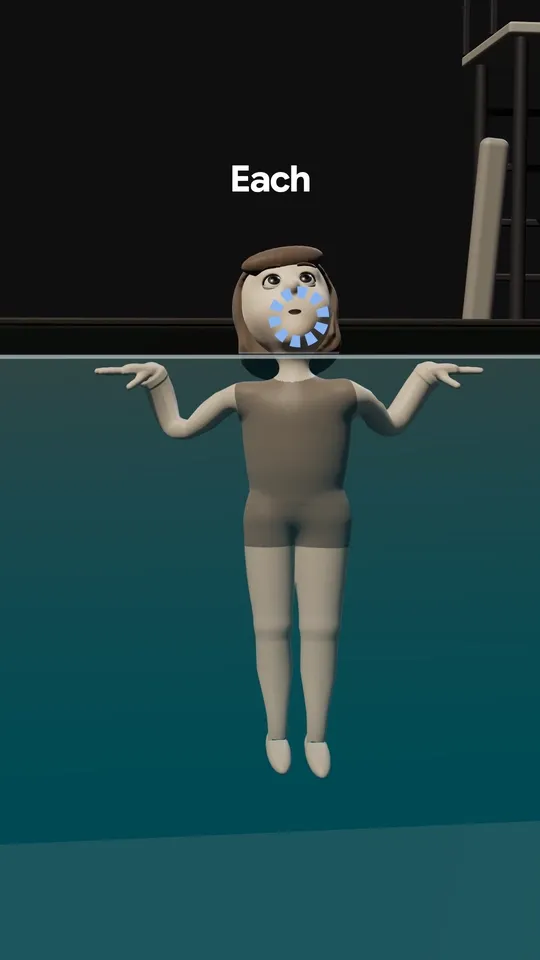
The reel opens on a swimmer who looks up and sees the beach getting farther away, swims hard toward it and still drifts out. From above, breaking waves push water onto the beach, and the water slides along the sand to one spot. There it rushes back out to sea as a narrow gold stream through a gap in the waves, with the swimmer inside it. The swimmer turns, swims sideways along the beach until out of the gold, and a wave from behind helps push the swimmer back toward the sand.
Transcript
You're swimming in the sea, and each time you look up, the beach is farther away. So you swim hard, straight toward the beach, and the beach still gets farther away. You see, the waves keep pushing water toward the beach, and that water has to flow out to sea again. The water rushes out to sea through a gap in the waves, right where you're swimming, in a narrow stream called a rip current. You're swimming straight against the rip current, so you make little progress, and you can tire fast. But the rip current is narrow, so if you can, swim sideways, parallel to the beach, until you're out of the rip current. Once you're out of the rip current, the same waves that push water toward the beach can push you toward the beach too.
The facts, with sources (7)
- A rip current is a narrow stream flowing out to sea. NOAA calls rip currents "powerful, narrow channels of fast-moving water". Channel rips typically range from 5 to 100 yards wide, so the width varies. NOAA National Ocean Service · National Weather Service, rip current science
- The waves feed it. Incoming waves push water up the beach, and to stay in balance that water flows back out through the surf, typically through a break in the sandbar. From shore, a rip often shows as a gap in the line of breaking waves. NOAA and USLA slide notes (PDF) · National Weather Service
- Swimming straight back wears you out. Panicked swimmers often try to swim straight back to shore and risk drowning from fatigue, NOAA says. Swimmers who fight the current typically make little progress, then can quickly tire. NOAA National Ocean Service · NOAA and USLA slide notes (PDF)
- Swim parallel to the shore. The American Red Cross, NOAA and Britain's RNLI all advise swimming parallel to the shore until you're out of the current. The RNLI adds "if you can", and says to wade, not swim, if you can stand. American Red Cross · RNLI (archived)
- Then let the waves help. Once you are out of the rip, NOAA and the US Lifesaving Association say to use the waves to push you back to shore. NOAA's own page says to swim back to land at an angle. NOAA and USLA slide notes (PDF) · NOAA National Ocean Service
- It pulls you out, not under. Undertow and rip currents are separate things, and neither pulls a person under the water. A rip current pulls you away from the shoreline. National Weather Service · NOAA and USLA slide notes (PDF)
- It can outpace an Olympic swimmer. Rip currents can move at up to eight feet per second, faster than an Olympic swimmer. Lifeguards rescue tens of thousands of people from them in the US every year, and an estimated 100 die, NOAA says. NOAA National Ocean Service · RNLI (archived)