What to do if you fall through ice?
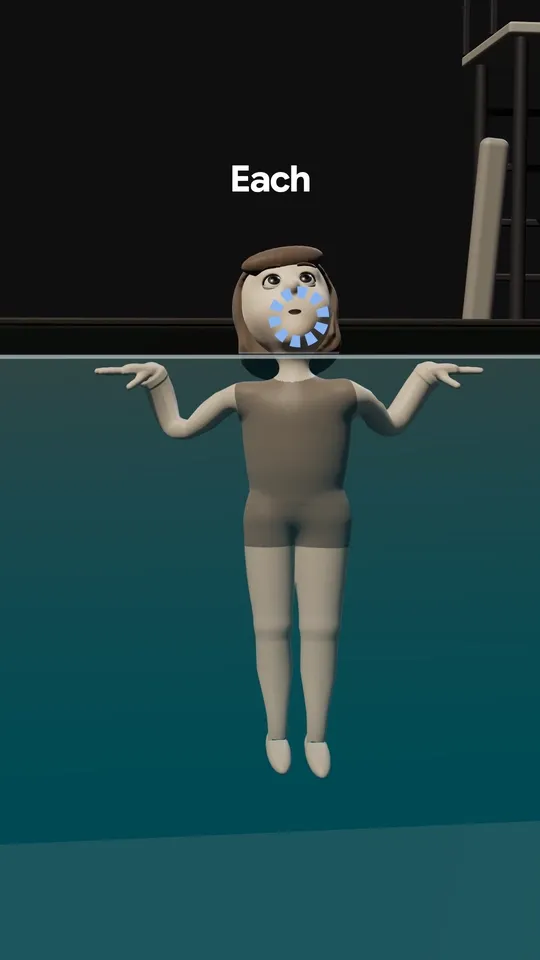
First keep your face above the water and slow your breathing, because the cold-shock phase, with its gasp, causes most cold-water deaths. Once the gasping stops, turn back the way you came, put your arms flat on the ice and kick until you slide out. Don't stand up: stay flat and roll away from the hole.
What the reel shows
The reel opens on your boots on a frozen lake as a crack runs through the ice, then drops you into the dark water, gasping. A cutaway of the lungs shows the gasp pulling in air, and water if your face is under. Above the surface you thrash, then slow your breathing, while a 10-minute clock counts down the strength in your arms. You kick flat onto the ice and roll away from the hole.
Transcript
You're halfway across a frozen lake when the ice breaks, and the first thing that can kill you is your own gasp. The moment the ice water hits your skin, your lungs pull in a huge gasp on their own, and you can't stop it. If your head is under the water when you gasp, you breathe in water and drown. Most people think the cold will kill them in minutes, so they panic and thrash. But freezing to death takes far longer than that. So while you're still gasping, keep your face above the water and slow your breathing down. Don't take off your coat, because the air trapped inside it helps you float. Once the gasping stops, climb out fast, because your arms get weaker every minute, and within about ten minutes, they can stop working. Turn back the way you came, put your arms flat on the ice, and kick until your body slides out onto it. Don't stand up, or you'll break through again. Stay flat and roll away from the hole, back along the ice that already held your weight.
The facts, with sources (7)
- The gasp is the first danger. The first reactions to immersion, called cold shock, are classed as the most dangerous period and account for most deaths from immersion in cold water. Knechtle et al. 2020 · McGill Office for Science and Society
- The gasp is involuntary. Cold water on the skin triggers "an uncontrollable heavy breathing (gasp)", then hyperventilation and loss of breathing control. If your head is under water when you gasp, you breathe water in. Knechtle et al. 2020 · National Center for Cold Water Safety
- Slow your breathing first. The Lifesaving Society says you have about one minute to get your breathing under control: "take slow, even, and full breaths." Lifesaving Society
- Keep your winter clothes on. Heavy clothing can trap air that gives warmth and flotation. Wisconsin DNR · New York State DHSES
- You have about 10 minutes of useful movement. That is the window for climbing out before your muscles stiffen. Hypothermia takes about an hour to knock you out. Lifesaving Society · McGill Office for Science and Society
- The 1-10-1 numbers are rough guides. The rule is cold-water researcher Gordon Giesbrecht's. The National Center for Cold Water Safety warns that breathing control can be lost for much longer than a minute. In near-freezing water, arms can fail within 2 to 10 minutes. National Center for Cold Water Safety · McGill Office for Science and Society
- Turn back, kick, then roll. Head back the way you came, probably the strongest ice. Put your arms on the unbroken ice, kick until your body is flat, and slide out. Don't stand: roll away from the hole. Wisconsin DNR · New York State DHSES