What happened on British Airways Flight 5390?
On 10 June 1990, the jet's cockpit window blew out at about 17,300 feet, and the captain was sucked halfway out of the plane. Two stewards, one after the other, held on to him until the co-pilot landed, 22 minutes later, and everyone survived. Investigators found that 84 of the window's 90 bolts were one size too thin.
What the reel shows
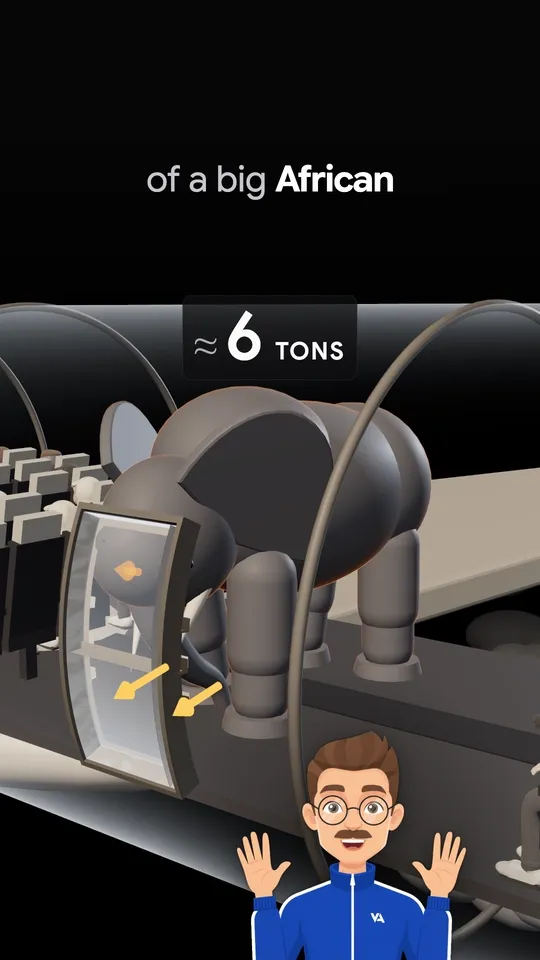
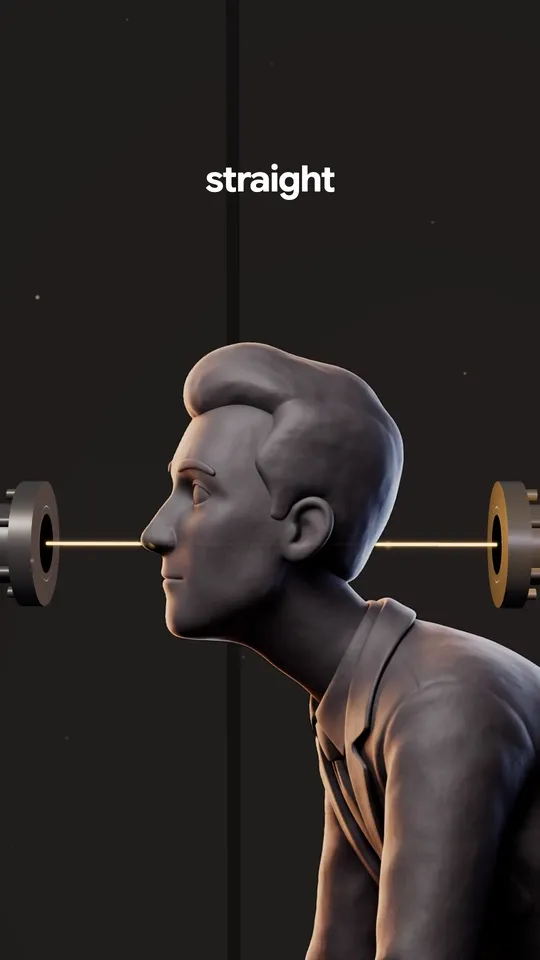
The reel opens on the jet in the sky as the cockpit window blows out with a bang and the captain is pulled halfway out over the roof. Comic panels show his legs caught under the controls, a steward grabbing him round the waist, the co-pilot flying alone and a second steward holding his ankles. After the landing, investigators line up the bolts, and an old and a new bolt sit side by side, close enough to look the same.
Transcript
The cockpit window blew out with a bang, and the rushing air sucked the captain halfway out of the plane. His legs caught under the controls, but his head and chest were bent backwards over the roof, in air as cold as a freezer. So how does a window just fall out of a plane? Inside the cockpit, a flight attendant ran in and grabbed the captain around the waist. In the next seat, the co-pilot took the controls and flew the plane down, alone. The flight attendant's arms began to freeze, so another flight attendant grabbed the captain's ankles and held on. The crew thought the captain couldn't survive, but they kept holding on. Then, as the plane came down to land, the captain's legs started to kick, which told the crew he was still alive. Twenty-two minutes after the bang, the co-pilot landed the plane, with the captain still half outside. After the landing, investigators measured the bolts that had held the window on. Every new bolt was one size too thin. The day before, a mechanic had fitted that window, brand new, with new bolts. He held an old bolt up to the bolts in a rack of drawers, and took new ones that looked the same, without reading the labels. Bolts that thin could barely grip, so as the plane climbed, the air pumped inside the cabin pushed the window right out. The captain survived, but the bolts that nearly killed him were too thin by less than the thickness of a credit card, close enough to look the same.
The facts, with sources (7)
- The window blew out 13 minutes after takeoff. The BAC One-Eleven was climbing through about 17,300 feet when the cockpit window blew out with a loud bang. AAIB report 1/1992 (PDF)
- The captain was sucked halfway out. His legs caught under the controls, and he lay on his back against the top of the fuselage, in air of about −17 °C. A home freezer is set to about the same. AAIB report 1/1992 (PDF) · FDA
- The crew held on. A steward grabbed him round the waist. When the steward's arms froze and weakened, a second steward held the captain's ankles until after landing. The crew each concluded his survival was "highly improbable". AAIB report 1/1992 (PDF)
- The co-pilot landed alone, 22 minutes later. The captain stayed outside "throughout the descent and landing" at Southampton. He survived with fractures, frostbite and shock, and all 81 passengers and 6 crew survived. AAIB report 1/1992 (PDF) · Wikipedia
- 84 of 90 bolts were one size too thin. The window had been fitted new about 27 hours before the flight. Its 84 new bolts were about 0.026 inch (0.66 mm) too narrow, and the other 6 were 0.1 inch too short. AAIB report 1/1992 (PDF) · Wikipedia
- They were matched by eye. The shift maintenance manager compared an old bolt with new ones at an unsupervised parts carousel in poor light, without using the drawer labels. AAIB report 1/1992 (PDF)
- The gap was thinner than a credit card. 0.66 mm is less than the 0.76 mm thickness of a standard ID-1 card. AAIB report 1/1992 (PDF) · ISO/IEC 7810 (Wikipedia)